Why 24 to 48 Hours Is the Critical Window
Mold spores are present in virtually every home already, just waiting for the right conditions. Once a surface stays wet and the surrounding air holds enough humidity, those spores can establish and start spreading within one to two days. That's a biological process, not a worst-case estimate, which is why the timeline doesn't bend much based on how careful you are afterward.
What Speeds Up or Slows Down Mold Growth
Warmer temperatures and higher humidity speed up the process, while cooler, drier conditions buy you a little more time. Porous materials like drywall and carpet pad hold moisture longer than tile or sealed concrete, which means those materials are usually where mold shows up first after a water event.
Signs Mold Has Already Started
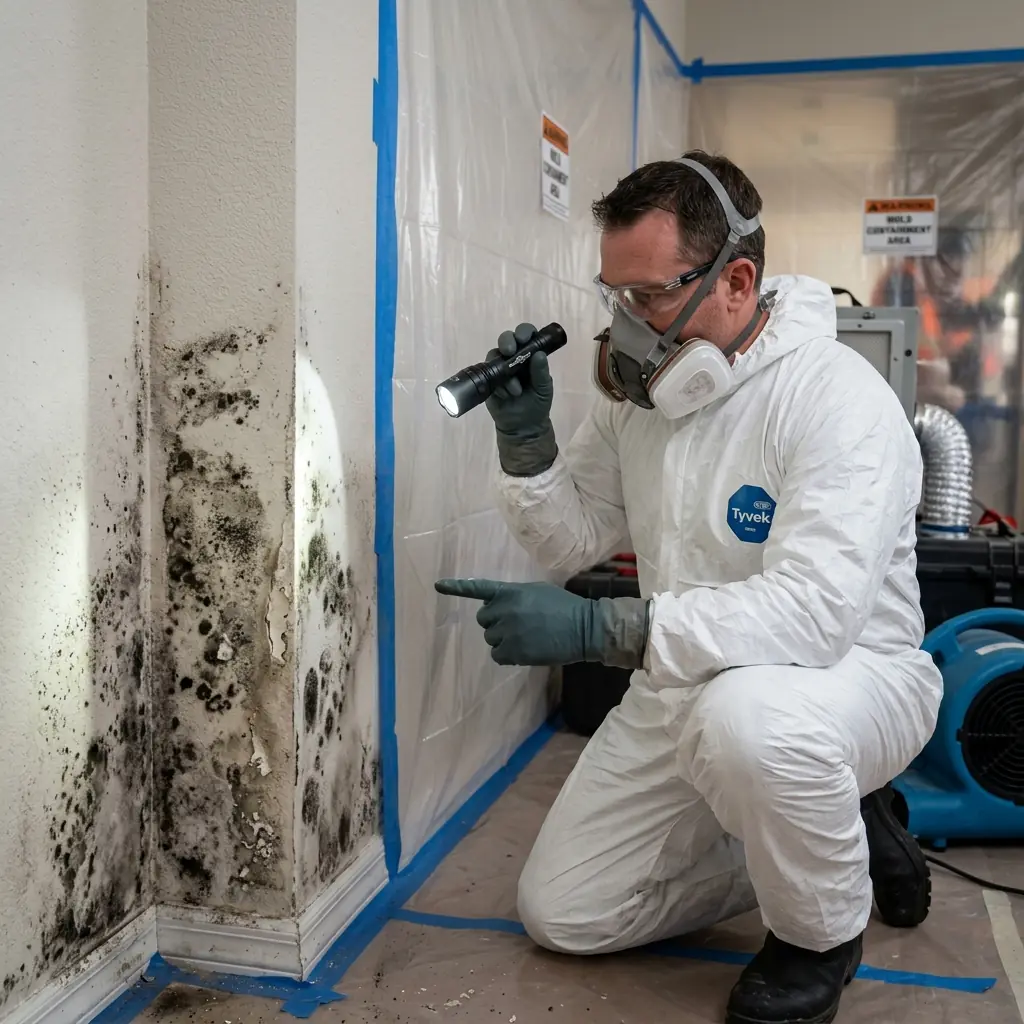
A musty smell is often the first sign, even before any visible discoloration. Look for dark spots on drywall, especially near baseboards, or a fuzzy texture on damp cardboard or paper. If you notice any of these, the window for simple extraction and drying has likely already closed.
Why Drying Alone Isn't Always Enough
Drying the visible surface doesn't always mean the material underneath or behind it is dry too. A wall that feels dry to the touch can still hold moisture in the cavity behind it, which is why structural drying uses thermal imaging and moisture meters rather than a visual check alone.
What to Do If You Think Mold Has Already Started
Don't try to clean it yourself with bleach or a household cleaner, since that can spread spores rather than remove them. Call a mold remediation crew that can assess the full extent of the contamination and remove it safely under Texas's TDLR licensing requirements. Trying to handle it yourself usually just delays the inevitable professional cleanup while giving spores more time to spread into adjacent rooms.
Worried mold has already started? Call (972) 645-4358 for a fast assessment across Lancaster.