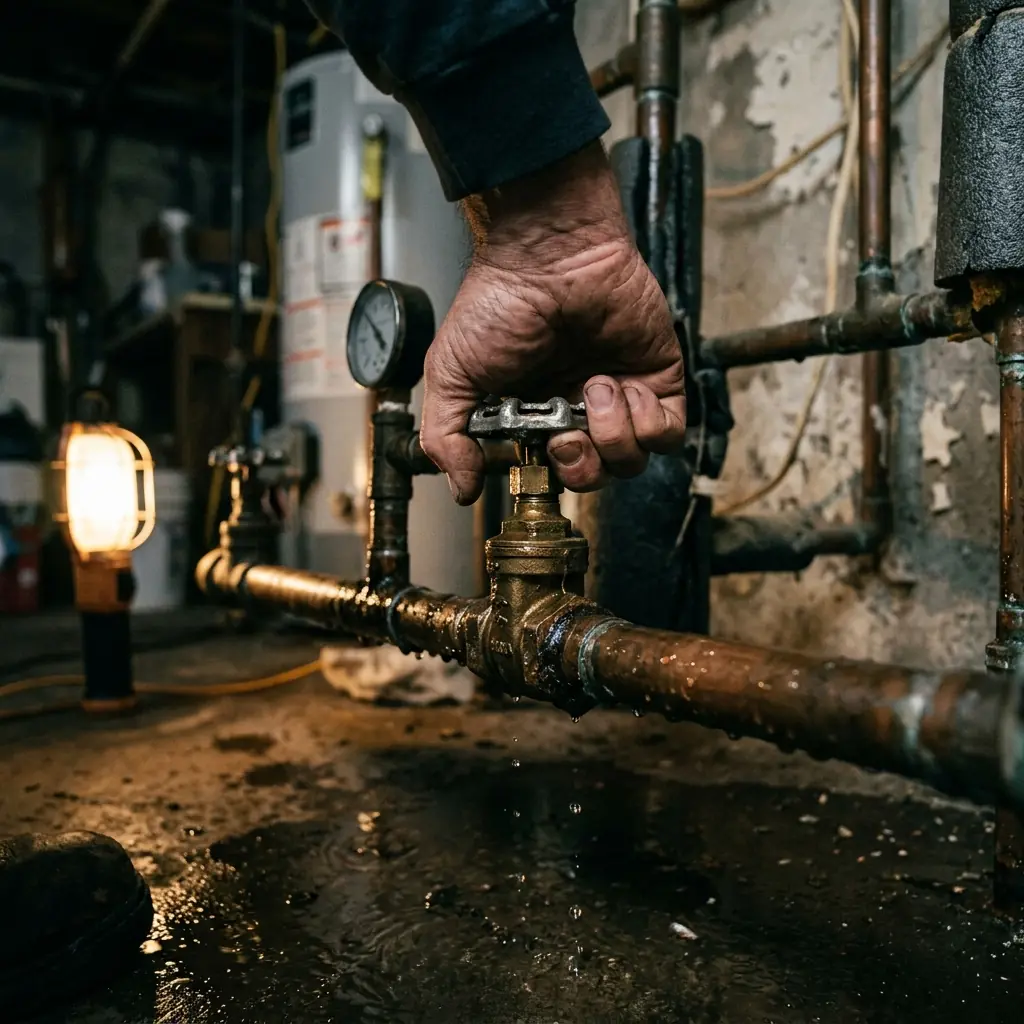
Hour One: Stop the Source and Stay Safe
If it's safe to do so, shut off the water at the source, whether that's the main valve or a specific fixture. Avoid stepping into standing water if there's any chance it's near outlets or electrical panels. Take photos before you move anything, since this becomes your earliest documentation for an insurance claim.
Hours One to Three: Call for Extraction
Standing water starts migrating into flooring, baseboards, and wall cavities within hours, which is why water extraction needs to start as early as possible. A truck-mount extractor removes far more water than a wet vac, and getting that equipment on-site early limits how far the damage spreads.
Hours Three to Twelve: Moisture Mapping
Once visible water is gone, the real question becomes how far moisture has traveled into materials you can't see, like behind drywall or under flooring. Moisture meters and a FLIR thermal camera map this without requiring demolition, which tells the crew exactly where drying equipment needs to go.
Day One to Five: Structural Drying
Dehumidifiers and air movers run continuously until moisture readings hit the goals set by ANSI/IICRC S500-2021. This isn't a guess based on how things look, it's a measured target, and structural drying doesn't stop until those numbers are met.
What Happens If You Wait Instead of Calling Right Away
Every hour water sits raises both the restoration cost and the risk of mold, which can begin within 24 to 48 hours of standing water. Waiting to see if it dries on its own is one of the most common reasons a manageable job turns into a much bigger one. The first 24 hours set the trajectory for everything that follows, including how smoothly your insurance claim moves through Texas's Chapter 542 timeline. Acting fast in those early hours is the single biggest factor within your control.
Water damage happening right now? Call (972) 645-4358 for 24/7 dispatch across Lancaster.