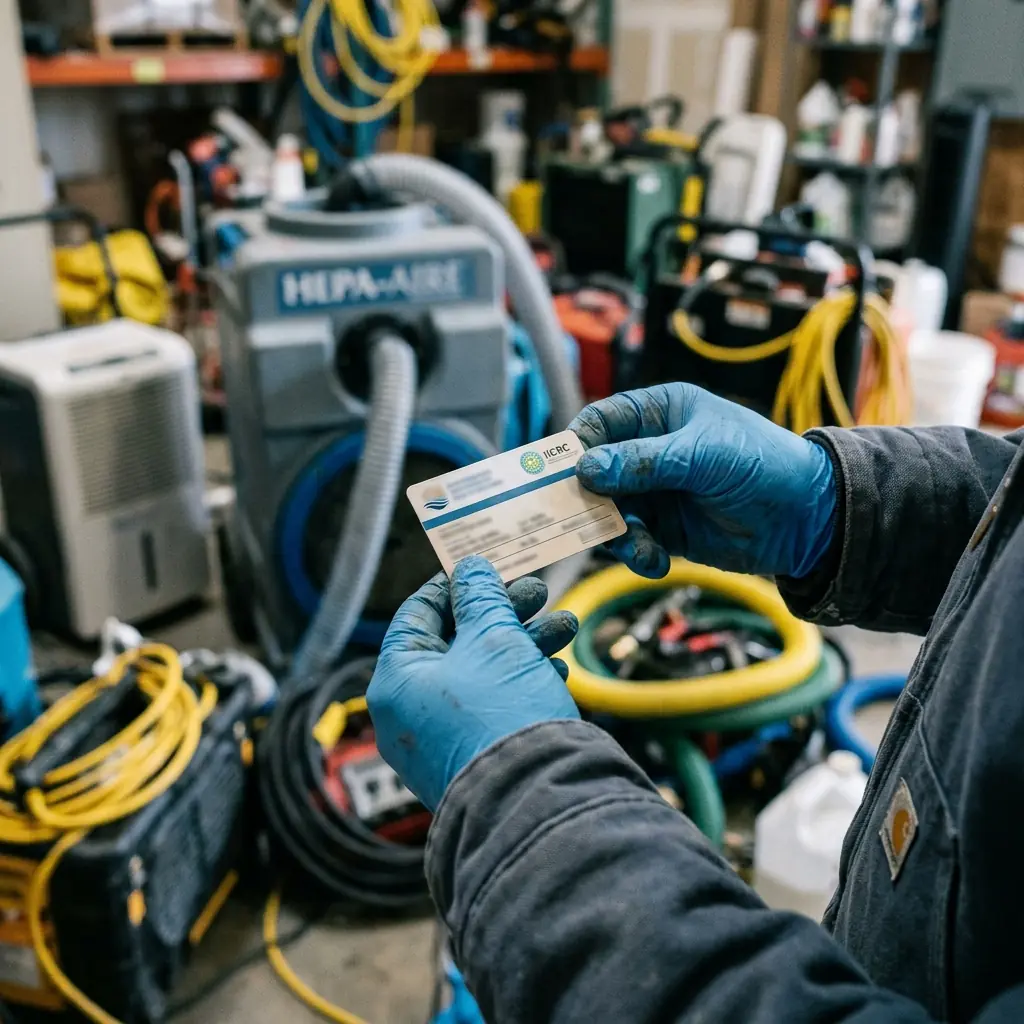
What IICRC Actually Is
The Institute of Inspection, Cleaning and Restoration Certification is the industry's governing body for water damage restoration training. It's not a marketing badge, it's a real certifying organization that trains and tests individual technicians, not just companies.
WRT: The Entry-Level Field Certification
Water Restoration Technician certification covers the fundamentals: how water damage affects materials, drying techniques, and how to handle sewer backflow situations safely. This is the baseline certification a hands-on technician should hold.
ASD: The Advanced Certification
Applied Structural Drying certification builds on WRT and goes deeper into structural drying science and creating restorative drying environments. A technician needs WRT first before pursuing ASD, so it represents real progression in training, not just a second badge.
ANSI/IICRC S500-2021: The Standard Itself
This is the actual technical standard restoration work is measured against, covering everything from water categories to drying goals. When a company says they dry to S500 standards, that means they're checking moisture readings against documented targets, not just eyeballing when something looks dry.
How to Verify a Company's Certifications
You can check individual technician certifications at iicrc.org before any work begins. A company that's confident in its credentials won't hesitate to provide certification numbers, and our own technicians' credentials are part of what we cover on our about us page.
Why This Matters for Your Specific Job
Our structural drying and mold remediation services both rely directly on IICRC-trained technicians following these standards, which is the difference between a job that's actually finished and one that just looks finished.
What Happens When a Company Skips These Standards
Work that isn't measured against S500 drying goals can look complete while still holding moisture inside walls or under flooring. That hidden moisture often surfaces weeks later as mold, turning what should have been a one-time restoration job into a repeat call and a bigger expense. Verifying credentials up front is a small step that protects you from that exact outcome, and it only takes a minute on iicrc.org to check. That one minute of verification is a fair trade against the risk of a job that doesn't actually meet the standard it claims to.
Have a credentials question before you hire? Call (972) 645-4358 any time.