What Causes a Slab Leak
Expansive clay soil shifts with moisture changes, putting stress on supply and drain lines that run beneath a foundation. Over time, that stress can crack a pipe, releasing water that travels along the path of least resistance before ever reaching a visible surface.
Signs You May Have a Slab Leak
A warm spot on the floor, even in a room without radiant heating, can indicate a hot water line leak underneath. A consistently running water meter when all fixtures are off is one of the clearest signs. A musty smell or unexplained mold growth near the floor are also common indicators.
Why Slab Leaks Are Hard to Detect Early
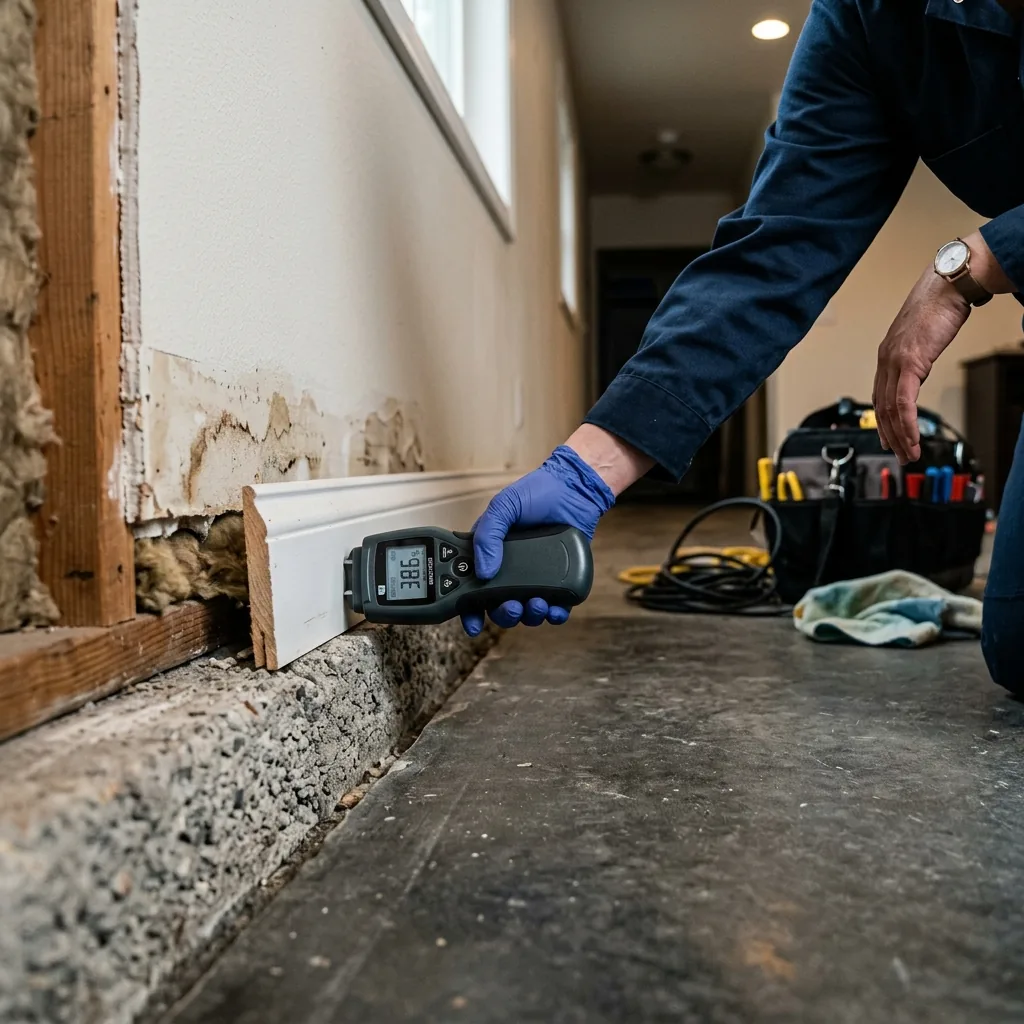
Unlike a visible pipe burst, a slab leak often presents through indirect signs rather than standing water. By the time it's visually obvious, it's frequently been running for an extended period, which is part of why our structural drying process includes thorough moisture mapping rather than relying on visible signs alone.
The Connection to North Texas Clay Soil
Our clay soil water damage guide covers how soil movement specifically contributes to foundation-related plumbing failures across this part of Texas.
What Happens Once a Slab Leak Is Confirmed
A plumber typically needs to locate and repair the actual leak, while a restoration crew handles the water damage cleanup and drying that resulted from it. We coordinate the restoration side and document everything for your insurance adjuster, including moisture readings, the affected materials, and the timeline of the loss, so the plumbing repair and the water damage claim don't get tangled together during review.
Why Acting Early Saves Money
A slab leak caught early might only require drying a small section of flooring. One that runs for weeks can saturate subflooring across an entire room, lead to mold growth, and in some cases contribute to additional foundation movement. The cost difference between catching it early and catching it late is often substantial, which is exactly why the warning signs above are worth checking for regularly.
Suspect a slab leak? Call (972) 645-4358 for an assessment across Lancaster.